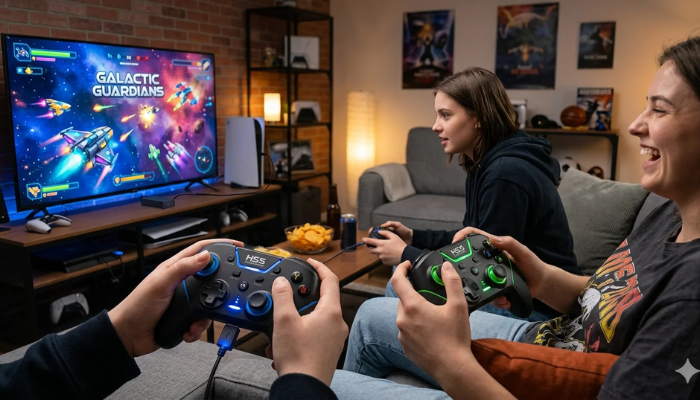

In modern gaming, precision and responsiveness are everything. Whether you’re playing competitive esports titles or immersive single-player adventures, controller performance can make or break your experience. This is where connectivity hssgamepad becomes a crucial concept for gamers who want smooth, lag-free, and reliable input performance.
The term connectivity hssgamepad refers to the way a gamepad establishes and maintains a stable connection with gaming devices such as PCs, consoles, or mobile phones. From Bluetooth pairing to wired USB connections, connectivity determines how fast and accurately your inputs are registered. In this article, we’ll explore everything you need to know about it, including setup methods, troubleshooting techniques, optimization strategies, and future trends shaping the gaming world.
Understanding connectivity hssgamepad and How It Works
The concept of connectivity hssgamepad is centered around how a gaming controller communicates with a device. This communication happens through signal transmission, which can be wired or wireless. When you press a button on your gamepad, that input is translated into a digital signal and sent to your system in real time.
Modern gamepads are designed to minimize latency and maximize accuracy. The connectivity system ensures that every movement, whether it’s a joystick tilt or a trigger press, is accurately interpreted. A strong connectivity setup in an hssgamepad leads to seamless gameplay without interruptions or delays.
From a technical standpoint, connectivity involves pairing protocols, signal stability, and data transmission speed. These elements work together to maintain consistency. If any part of the chain is weak—such as poor Bluetooth pairing or unstable USB ports—the performance of the gamepad can suffer significantly.
The connectivity hssgamepad system is also influenced by device compatibility. A controller may work differently depending on whether it’s connected to a PC, Android device, or console. Each platform handles input signals in its own way, which makes understanding connectivity even more important for gamers who use multiple devices.
Types of Connectivity Options in HSS Gamepads
One of the most important aspects of connectivity hssgamepad is understanding the different connection methods available. The three most common types are Bluetooth, USB wired connection, and 2.4GHz wireless dongle connectivity.
Bluetooth connectivity is widely used due to its convenience and portability. It allows players to connect their gamepad without cables, making it ideal for mobile gaming and casual setups. However, Bluetooth can sometimes introduce slight latency depending on device quality and interference levels.
USB wired connectivity, on the other hand, offers the most stable performance. With a direct physical connection, input delay is minimized, making it the preferred choice for competitive gamers. In the context of connectivity hssgamepad, USB ensures consistent data transfer and eliminates wireless signal interference entirely.
The 2.4GHz wireless connection strikes a balance between convenience and performance. Using a dedicated USB receiver, it offers lower latency than Bluetooth while still providing wireless freedom. Many modern HSS gamepads rely on this method to enhance gaming responsiveness without sacrificing mobility.
Each connectivity option serves a different purpose. Understanding when to use Bluetooth, USB, or 2.4GHz is key to optimizing your gaming experience and ensuring the best possible performance from your controller.
Common Connectivity Issues and Troubleshooting
Even the best systems for connectivity hssgamepad can face occasional issues. One of the most common problems is input lag, where there is a noticeable delay between pressing a button and seeing the action on screen. This is often caused by weak wireless signals or background interference.
Another frequent issue is pairing failure, especially with Bluetooth gamepads. Sometimes the device fails to recognize the controller, or the connection drops unexpectedly. This can happen due to outdated drivers, low battery levels, or incompatible firmware versions.
USB connectivity issues are less common but can still occur. Faulty cables, damaged ports, or outdated system drivers may interrupt proper communication between the gamepad and the device. In such cases, switching ports or replacing the cable often resolves the problem.
To troubleshoot connectivity hssgamepad issues effectively, users should first restart both the controller and the device. Updating firmware, checking battery health, and ensuring proper driver installation can also resolve most connectivity problems. In more persistent cases, resetting the gamepad to factory settings is often the most effective solution.
Optimizing Performance and Reducing Latency
Improving connectivity hssgamepad performance is essential for gamers who want a smooth and responsive experience. One of the first steps in optimization is choosing the right connection type based on the gaming scenario. For competitive gaming, wired USB or 2.4GHz wireless is recommended due to lower latency.
Another important factor is reducing interference. Wireless signals can be disrupted by nearby devices such as routers, smartphones, or other Bluetooth accessories. Keeping your gaming setup clean from unnecessary wireless congestion can significantly improve controller responsiveness.
System optimization also plays a key role. Updating your operating system, graphics drivers, and controller firmware ensures that all components work together efficiently. In many cases, outdated software can negatively affect connectivity hssgamepad performance without users even realizing it.
Additionally, maintaining proper battery levels in wireless controllers is important. Low battery power can reduce signal strength and increase input delay. Keeping your gamepad charged ensures consistent performance and stable connectivity throughout gaming sessions.
Future of connectivity hssgamepad and Gaming Controllers
The future of connectivity hssgamepad is heading toward faster, smarter, and more adaptive technologies. As gaming evolves, developers are focusing on reducing latency to near-zero levels while improving wireless stability. This means players can expect even more responsive controllers in the coming years.
Artificial intelligence and machine learning are also expected to play a role in optimizing connectivity. Future gamepads may automatically adjust signal strength and response settings based on gaming conditions, ensuring the best possible performance without manual adjustments.
Cloud gaming is another factor shaping the future of connectivity. As more games move to cloud-based platforms, the demand for ultra-stable and low-latency controllers will increase. This will push manufacturers to develop advanced versions of connectivity hssgamepad systems that can handle real-time data streaming more efficiently.
We may also see universal connectivity standards emerge, allowing a single gamepad to seamlessly connect across all platforms without compatibility issues. This would simplify gaming setups and enhance user experience significantly.
Conclusion
The concept of connectivity hssgamepad plays a vital role in shaping modern gaming experiences. From basic Bluetooth pairing to advanced wireless systems, connectivity determines how smoothly and accurately a controller performs. Understanding its mechanisms helps gamers make better decisions when choosing and optimizing their devices.
Whether you’re troubleshooting issues, optimizing performance, or exploring future trends, mastering connectivity ensures that your gaming sessions remain smooth and enjoyable. As technology continues to evolve, the importance of stable and responsive gamepad connectivity will only grow stronger.
FAQs
1. What does connectivity hssgamepad mean?
It refers to how a gamepad connects and communicates with a device like a PC, console, or mobile phone.
2. Which connectivity type is best for gaming?
USB wired and 2.4GHz wireless connections are best for low-latency gaming performance.
3. Why is my hssgamepad lagging?
Lag can be caused by interference, low battery, outdated drivers, or weak Bluetooth signals.
4. How do I fix pairing issues in connectivity hssgamepad?
Restart devices, update firmware, and ensure Bluetooth compatibility.
5. Is wired connection better than wireless?
Yes, wired connections usually offer more stable and faster response times.
6. Can I use hssgamepad on mobile devices?
Yes, most modern gamepads support Bluetooth connectivity for mobile gaming.
7. How can I reduce input delay?
Use wired or 2.4GHz connections and minimize wireless interference.
8. Does battery level affect connectivity performance?
Yes, low battery can weaken signal strength and increase lag.
9. Can firmware updates improve connectivity?
Absolutely, updates often fix bugs and improve overall performance.
10. What is the future of connectivity hssgamepad?
It will likely include AI optimization, faster wireless protocols, and universal compatibility across platforms.